Slack AI vs Dedicated Context Tool: Why Consulting Firms Need a Knowledge Layer That Shows Its Sources
Slack AI surfaces answers but can't show which thread, date, or version it drew from. For consulting firms, AI without citations is a liability. Here's the gap
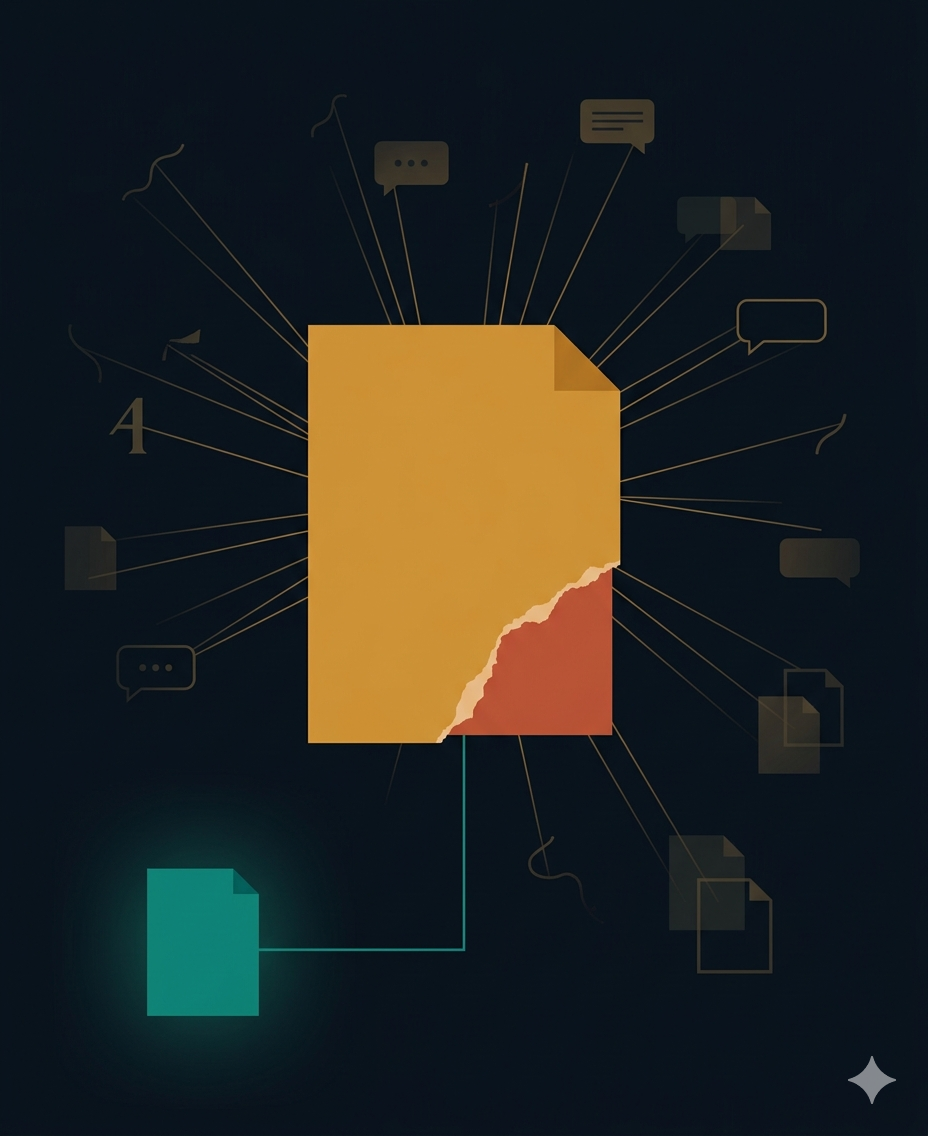
When comparing Slack AI vs a dedicated context tool for consulting firms, the meaningful gap isn't speed or coverage — it's provenance. Slack AI and similar ambient AI tools synthesize answers from your firm's messages but cannot show which thread, which date, or which version of the truth they drew from. A dedicated context layer, by contrast, grounds every claim in a citable source — the email, deck slide, or Slack message it actually retrieved — making AI output accountable, not just plausible.
- AI without source citations is hearsay: a model that synthesizes without showing its work produces plausible, fluent, unverifiable output — a liability in any client-facing consulting context.
- The sourcing tax is quantifiable: one AI sourcing failure per month costs conservative estimates of $7,200/year at 5 consultants, $13,500–$18,000/year at 15, and above $30,000/year at 25 — before credibility damage.
- The capability gap that matters isn't prompts or model quality — it's whether the system can trace every claim back to a specific source document, date, and author your team can open and verify.
The deck went to the client on Thursday.
The AI had pulled together a clean summary of the client's prior commitments — the scope they'd agreed to in Q1, the budget ceiling, the two items they'd explicitly said were out of scope. It was fluent. It was confident. It was, as far as anyone on the team could tell before the call, accurate.
It wasn't. The source was a draft from February — before the client revised scope in a follow-up thread. The final agreed version lived in a different email chain. The AI had found the most plausible answer. It had no way to tell you which document it drew from, or when that document was last authoritative.
The client noticed before the presenter did.
This is the Slack AI vs dedicated context tool question in its most concrete form — not a feature matrix comparison, but a risk question every consulting firm using ambient AI tools needs to answer before Thursday's deck goes out.
The problem isn't the AI. It's what "answer" means without a source.
In a courtroom, testimony without a witness is hearsay. You can't cross-examine it. You can't verify the chain of custody. It may be true — but it's inadmissible because you can't confirm how it knows what it claims to know.
An AI that synthesizes without citation is producing the same thing: plausible, fluent, unverifiable output. The model isn't lying. It's doing exactly what it was built to do — pattern-match toward the most coherent answer across everything it ingested. The problem is that "most coherent" and "drawn from the right source at the right point in time" are not the same thing.
In client-facing consulting work, the difference between those two things is the difference between a deliverable and a liability.
Slack AI is genuinely useful. It surfaces relevant messages faster than manual search. But surfacing relevance is not the same as establishing provenance. When it gives you a summary of what a client agreed to, it does not tell you which thread, which date, or whether that thread reflects the final version or a working draft that was subsequently revised. The answer may be right. You have no systematic way to confirm it without checking the source yourself.
Which means you've added the verification step back in manually — and you're doing it under time pressure, right before the client call.
Every consulting firm using AI to pull prior context is, right now, somewhere on a spectrum. On one end: AI that surfaces a claim with a source attached — the email thread, the deck slide, the Slack message, the date. On the other: AI that gives you the answer and asks you to trust it.
The first is a colleague. The second is an unreliable witness you're putting on the stand.
What grounded AI actually means — and why "smarter prompts" don't fix it
The conversation in most consulting firms is about prompting: how to ask better questions, how to structure the query, how to get more useful output. That conversation is sideways.
The issue isn't how you ask. It's whether the system can trace the answer back to a specific source your team can open, verify, and stand behind in front of a client.
Grounded AI — where every claim points to the document, email, or message it drew from — is the operational standard consulting firms need. Not better model selection. Not more refined prompts. A retrieval layer that doesn't just find relevant context but shows its work: this claim comes from this source, dated this, last touched by this person.
That's the real comparison point when weighing Slack AI vs a dedicated context tool. Slack AI is an ambient layer — it reads what's already in your Slack workspace and synthesizes on demand. A dedicated context tool is an accountable layer — it ingests your firm's full source record and returns claims with citations your team can open and verify.
The difference isn't speed. Both are fast. The difference is accountability after the answer is delivered.
This is what separates a productivity tool from a client-facing knowledge system. The productivity tool helps you move faster. The knowledge system lets you move fast and be accountable for where you landed. For consulting firms where clients are paying for judgment backed by evidence, that distinction isn't a feature preference — it's a professional standard.
For more on why the underlying problem is retrieval architecture rather than tool selection, see why most consulting firms have a retrieval problem, not a knowledge problem.
The sourcing tax: what one unverified AI claim costs by firm size
This isn't a worst-case scenario. It's a conservative read on what one sourcing failure per month costs in rework time — before client credibility damage is factored in.
5 consultants: One senior person reconstructing a source trail takes a half-day. At $150/hr, that's $600 per incident before the client sees a correction. Monthly: $7,200/year lost to one preventable failure pattern.
15 consultants: Three to four active client accounts where AI is touching deliverable drafts. A sourcing failure cascades — the analyst who drafted, the manager who reviewed, the principal who re-engages the client. Four hours of rework spread across seniority levels. Per incident: $900–$1,200. Monthly exposure: $13,500–$18,000/year.
25 consultants: At this scale, AI-assisted synthesis is likely happening across multiple workstreams simultaneously. One sourcing failure per account per month — even at a conservative rework estimate — puts the annual exposure above $30,000/year, before factoring in the harder-to-price cost of a client who noticed before you did.
None of this appears on a report. It's absorbed as "things that happen," billed against buffer time, or written off as operational friction. It's not. It's a tax on every AI-assisted deliverable that can't show its receipts.
The full cost structure of this kind of context loss — including how it compounds as you add tools — is worth understanding in detail. The true cost of consulting firm context recovery breaks down how the math gets worse, not better, as your stack grows.
The question to ask before your next client deliverable
Not "did the AI get it right?" You can't answer that reliably without checking the source yourself — which means you've added the verification step back in manually.
The better question is: does the AI you're using show you where it got the answer?
If the answer is no — if your AI tool gives you confident output and asks you to trust it without surfacing the source document, the date, the thread — you're not running a knowledge system. You're running a plausibility engine and vouching for its output to clients who expect you to have done the work.
This is the practical answer to the Slack AI vs dedicated context tool question for consulting firms. Slack AI is not a knowledge layer. It was not designed to be one. It's a productivity surface for a messaging platform — extraordinarily useful for what it is, which is not the same thing as a grounded retrieval system that can account for every claim it returns.
The model being good at its job isn't enough. Testimony needs a witness.
If your firm is evaluating what that witness layer looks like operationally, the consulting decision velocity framework is a useful reference for how grounded retrieval changes the speed and accountability of client-facing decisions — not just the quality of individual answers.
Frequently asked questions
- What is the difference between Slack AI and a dedicated context tool for consulting firms?
- When comparing Slack AI vs a dedicated context tool, the primary difference is provenance. Slack AI synthesizes answers from messages in your workspace but does not surface the specific thread, date, or document version it drew from. A dedicated context tool — purpose-built for consulting firms — returns claims with citations: the exact source document, timestamp, and author, so any team member can open, verify, and stand behind the answer in front of a client. For consulting work where every claim needs to be traceable, that distinction determines whether your AI output is accountable or merely plausible.
- Why is AI without source citations a liability for consulting firms specifically?
- Consulting firms operate in a high-stakes environment where client-facing claims must be traceable to authoritative sources — the final agreed scope, the signed-off budget, the specific version of a deliverable. AI that synthesizes without showing its sources produces output that may be coherent but cannot be verified without manually checking the underlying record. When that verification fails — when the AI drew from a draft rather than the final version, or from a superseded thread — the exposure is not just rework time. It is credibility damage with a client who noticed the discrepancy before your team did. One sourcing failure per account per month generates an estimated $7,200–$30,000+/year in rework costs depending on firm size, before reputational costs are counted.
- What should consulting firms look for in a context tool beyond what Slack AI provides?
- Beyond what Slack AI offers, consulting firms should evaluate context tools on three criteria: (1) Source attribution — does every AI-generated claim link back to the specific document, message, or file it drew from, with a date and author? (2) Cross-tool retrieval — can the tool ingest and search across your full source record (email, documents, project files, Slack) rather than a single platform? (3) Version awareness — can the system distinguish between a draft and the final agreed version of a document, so a revised scope doesn't get confused with the original? These capabilities define the line between an ambient productivity tool and a grounded knowledge layer a consulting firm can rely on in client-facing work.